
Jára & Dada: Die Kunst des Nonsens Zürich & Prag
Jára & Dada: The Art of Nonsense Zürich & Prague
Jára & Dada: Nonsens-Art Curych & Praha
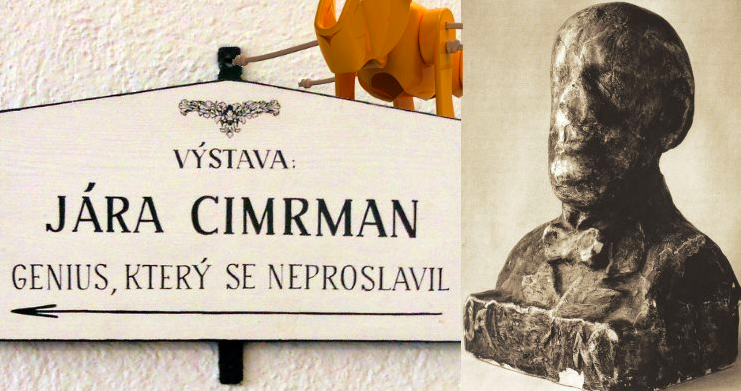
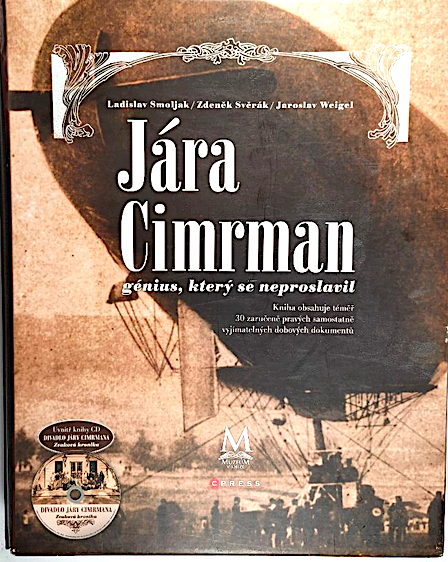
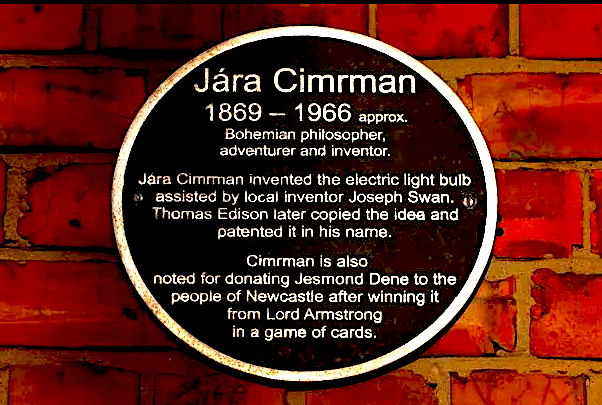
In meiner relativ kurzen Studienzeit in Prag hatte ich auch einige interessante musikalische Auftritte – so z.B. mit der Gondolan-Brothers Band oder auch mit dem Jazzpianisten Jan Hammer, der später mit seiner Musik zu Miami Vice weltberühmt wurde. Es kam damals auch eine kuriose Anfrage bezüglich Musik-Auftritt im Jára Cimrman-Theater – eine skurrile, ironische Show im Monty Python-Dada-Stil. Keine Ahnung, warum daraus nichts wurde, aber mein Interesse an der legendären Figur, die in einer Umfrage zur wichtigsten Persönlichkeit des Landes gewählt wurde, blieb. Die Lust am Nonsens des Universalgenies, der sogar ähnlich wie ich hieß, ließ mich nie mehr los. Wer war Jára Cimrman? Ein Forscher, Philosoph, Erfinder, Dramatiker? In jedem Fall war er einer der Größten seiner Zeit und seiner Nation, soweit ist man sich in Tschechien einig. „Das können wir bestreiten, wir können sogar anderer Meinung sein, aber etwas anderes kann man nicht dagegen tun.“ So lautet ein berühmtes Zitat aus dem Film „Ležící, Spící“ („Liegend, Schlafend“) von 1983, der die Zuschauer durch ein Cimrman-Museum und gleichzeitig durch das Leben dieser dadaistisch geprägten Figur führt. Weitere Zitate gefällig? „Die Zukunft gehört dem Aluminium“, Bier im Bauch ist besser als Wasser in der Lunge” oder „Jedes überflüssige Wort ist überflüssig“. Alles tschechischer Humor auf dem aktuellen politischen Hintergrund, ohne Vorbilder und Analogien?
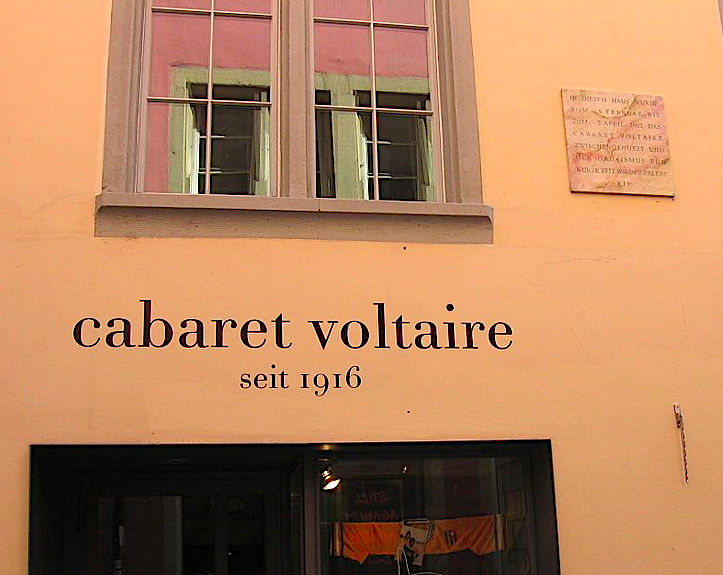
Nach meiner Ankunft in Zürich Jahre später wohnte ich in der Altstadt und im Niederdorf nahe Bodega und mein Weg zur Universität führte zwangsläufig am Cabaret Voltaire vorbei. Dada war damals nicht unbedingt ein relevantes Seminar-Thema und so versuchte ich selber Informationen über die Gruppe rund um Hugo Ball und Emmy Hennings zusammenzutragen und bin dabei auf Walter Serner gestoßen. Walter Serner wurde 1889 in Karlsbad in Tschechien als Walter Eduard Seligmann geboren, studierte in Berlin und ging 1914, um der Verhaftung und Einberufung in die Armee zu entgehen, in die Schweiz nach Zürich, wo er rege Kontakte zu den Dadaisten pflegte und später zwischen Paris, Genf und Prag pendelte und publizierte. Das folgende Zitat aus seinem Dada-Manifest „Letzte Lockerung“ – Untertitel: “Ein Handbrevier für Hochstapler und solche, die es werden wollen“ – könnte auch von Jára Cimrman stammen. “Es ist allgemein bekannt, dass ein Hund keine Hängematte ist.“ Am Ende des Kapitels „Blague“ heißt es: „Ich würde mich freuen zu lesen, dass diese Seiten der letzte Mist sind, der geschrieben wurde. Am 9. April 1919 trug Serner Teile aus „Letzte Lockerung“ auf der Dada-Soiree Non Plus Ultra in Zürich vor. Dabei kam es zu einem Tumult und Serner wurde von der Bühne gejagt. Was kommt mir heute dabei in Sinn? Die aktuelle Neuerscheinung von Werbepapst Jean Remy von Matt, dessen Bruder Dominique mich einst mit seinem Auto zu den Chefs von Wernli-Guetzli (“Wernli het me gernli“) für ein Interview fuhr. Titel des Remy-Bestsellers: “Am Ende: Das erste Buch, das vom Anfang bis Ende immer schlechter wird“. Die Werbung schöpft seit eh und je erfolgreich aus dem Dada-Ironie-Repertoire, ebenso wie die Musik (Helge Schneider): “Katzenklo, Katzenklo, ja, das macht die Katze froh“. Dada ist nicht Gaga, und Jára Cimrman lebt – in Zürich und Prag.
After arriving in Zurich years later, I lived in the Old Town and in the Niederdorf near Bodega, and my way to university inevitably led past the Cabaret Voltaire. Dada wasn’t exactly a relevant seminar topic at the time, so I tried to gather information about the group around Hugo Ball and Emmy Hennings myself, and in doing so, I came across Walter Serner. Walter Serner was born Walter Eduard Seligmann in Karlovy Vary, Czech Republic, in 1889. He studied in Berlin and, in 1914, to avoid arrest and conscription into the army, went to Zurich, Switzerland. There he maintained active contacts with the Dadaists and later commuted and published between Paris, Geneva, and Prague. The following quote from his Dada manifesto “Last Loosen Up”—subtitled “A Handbook for Imposters and Those Who Would Like to Be One”—could also have come from Jára Cimrman. “It is common knowledge that a dog is not a hammock.” At the end of the chapter “Blague,” he states: “I would be pleased to read that these pages are the last piece of rubbish written.” On April 9, 1919, Serner recited excerpts from “Last Loosen Up” at the Dada soiree Non Plus Ultra in Zurich. A commotion ensued, and Serner was chased off the stage. What comes to mind today? The latest release by advertising guru Jean Remy von Matt, whose brother Dominique once drove me in his car to the bosses of Wernli-Guetzli (“Wernli het me gernli”) for an interview. The title of Remy’s bestseller: “At the End: The First Book That Gets Worse and Worse from Beginning to End.” Advertising has always successfully drawn on the Dada repertoire of irony, as has music (Helge Schneider): “Litter box, litter box, yes, that makes the cat happy.” Dada isn’t Gaga, and Jára Cimrman is alive—in Zurich and Prague.
Witikon Songbook
Witikon a Songbook
Witikon with Songbook
DE
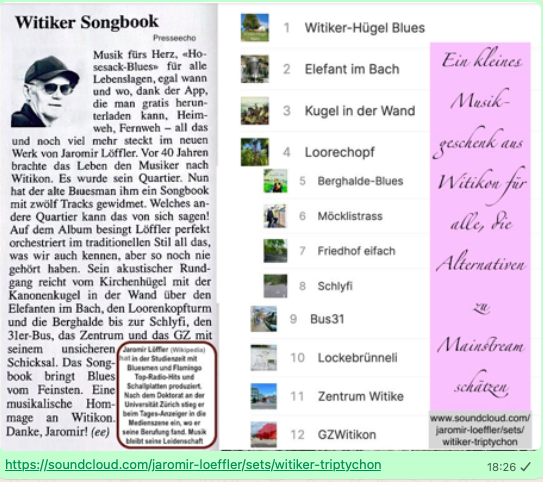
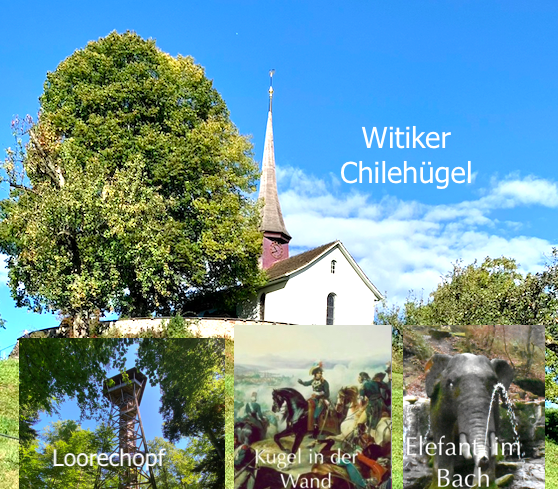
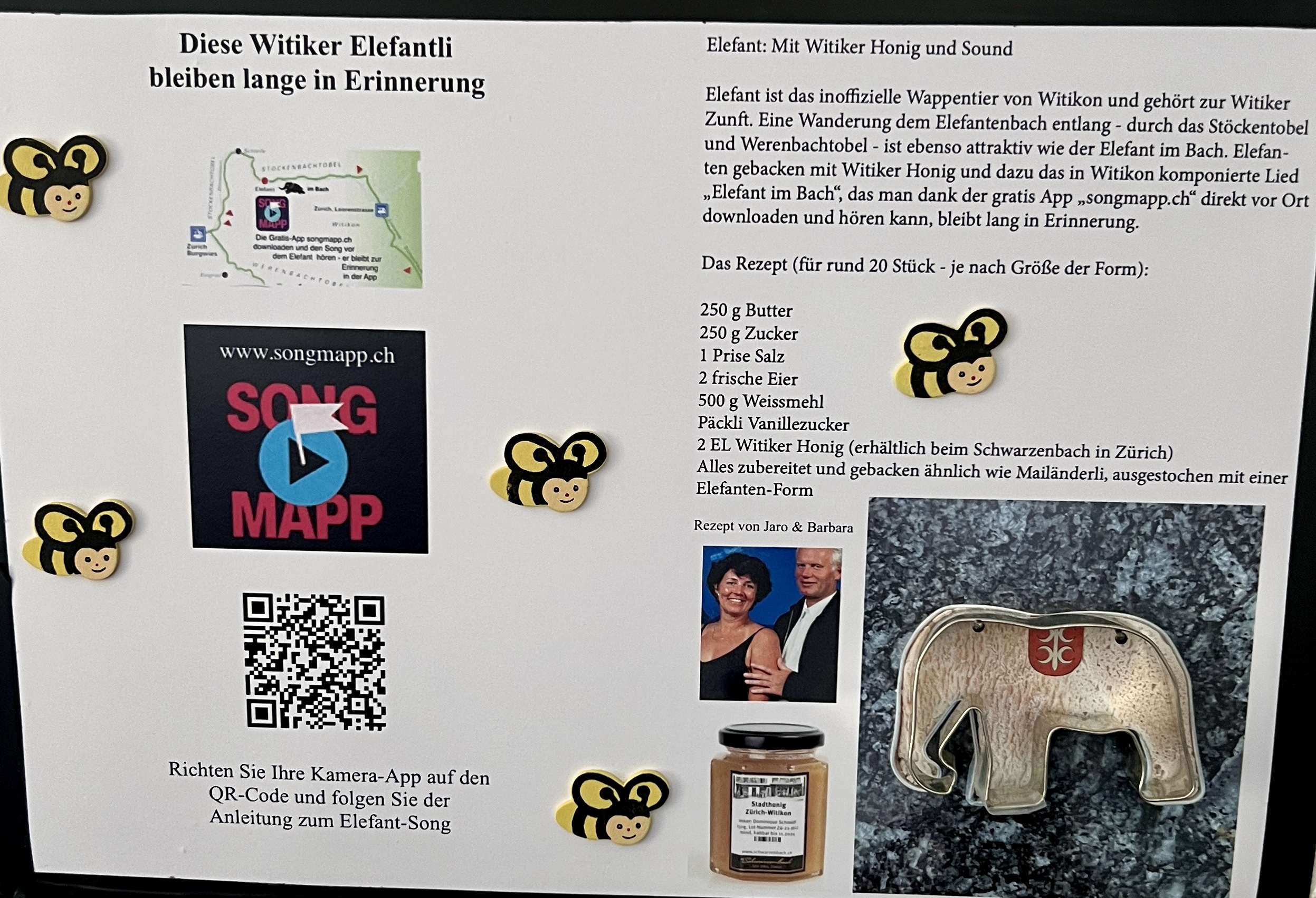
Der Ursprung Witikons liegt in den alemanischen Namen Vuitinchova und Wito und dürfte so etwas wie „Hof des Wito“ bedeuten. In unserem Fall führte der Weg nach Witikon über ein Inserat für ein kleines Haus, ohne Hof, aber mit Garten, das es im alten Dorfzentrum zu vermieten gab. Das Haus, stand gegenüber der alten Schule am Lochbrunnenweg bei der Kreuzung Möcklistrasse und Berghaldenstrasse und war ziemlich spartanisch ausgebaut aber sehr romantisch – ideal für eine junge Familie mit Kleinkindern. Leider war die Vermietung zeitlich begrenzt, das Haus wurde später renoviert, aber trotz mehreren Adresswechsel in Witikon im Laufe der letzten Jahrzehnte, kann ich mich dort dem magischen „spiritus loci“ nicht entziehen. Ich habe in bald 50 Jahren Witikon ins Herz geschlossen und sowohl den Wohltäter Möckli wie auch die Berghaldenstrasse später musikalisch verewigt in meinem Witiker Songbook – das wie eine Reise durch Witikon führt von einer Sehensürdigkeit zur anderen. Der Witiker Chillehügel oder der Elefant sind ebenso dabei wie Loorenkopf, Berghalde und Schlyfi, zudem habe ich im Songmap – der klingenden Smartphone-Landkarte der Schweiz – die Songs eingespielt, so dass jeder vor Ort gratis in der songmap-app die Musik hören kann. Es gibt songs über Kreuzberg und über Niederdorf – aber einzig das Witiker Songbook vertönt ein Zürcher Quartier im Laufe der letzen Jahrzehnte. Ein Quartier von Zürich das nach wie vor als Paradies gilt – obschon die Goldküste noch ein Stück weiter liegt.
Heute ist Witikon auch ein Ort der extrem starken baulichen Veränderungen, überall wird die alte Substanz abgerissen und neue Wohneinheiten gebaut – die kommende Generation kann das Songbook als historisches Ton-Bild einer Epoche wahrnehmen, die unser Empfinden prägte.
CZ
Původ názvu Witikon sahá do alemanských jmen Vuitinchova a Wito a pravděpodobně znamená něco jako „Witův dvůr“. V našem případě nás cesta do Witikonu zavedla přes inzerát na malý dům bez dvora, ale se zahradou, který byl k pronájmu ve starém centru vesnice. Dům stál naproti staré škole na Lochbrunnenweg u křižovatky Möcklistrasse a Berghaldenstrasse a byl poměrně spartánsky zařízený, ale velmi romantický – ideální pro mladou rodinu s malými dětmi. Bohužel pronájem byl časově omezený, dům byl později zrekonstruován, ale i přes několik změn adresy ve Witikonu v průběhu posledních desetiletí se nemohu ubránit magickému „spiritus loci“ tohoto místa. Za téměř 50 let jsem si Witikon zamiloval a jak dobrodince Möckliho, tak i Berghaldenstrasse jsem později zvěčnil ve svém Witiker Songbooku – který vede jako cesta po Witikonu od jedné památky k druhé. Witiker Chillehügel nebo Elefant jsou zde stejně jako Loorenkopf, Berghalde a Schlyfi. Navíc jsem nahrál písně do Songmap – zvukové mapy Švýcarska pro smartphony – takže si každý může na místě zdarma poslechnout hudbu v aplikaci Songmap. Existují písně o Kreuzbergu a Niederdorfu – ale pouze Witiker Songbook zaznamenává zvukově jednu curyšskou čtvrť v průběhu posledních desetiletí. Čtvrť Curychu, která je stále považována za ráj – i když Goldküste je ještě o kousek dál.
Dnes je Witikon také místem extrémně silných stavebních změn, všude se bourá stará zástavba a staví se nové bytové jednotky – příští generace může Songbook vnímat jako historický obraz éry, která formovala naše vnímání.
ENG
The origin of Witikon lies in the Alemannic names Vuitinchova and Wito and probably means something like ‘Wito’s farm’. In our case, the path to Witikon led via an advertisement for a small house, without a farm, but with a garden, which was available to rent in the old village centre. The house was opposite the old school on Lochbrunnenweg, at the intersection of Möcklistrasse and Berghaldenstrasse, and was quite spartan but very romantic – ideal for a young family with small children. Unfortunately, the lease was limited in time and the house was later renovated, but despite several
changes of address in Witikon over the last few decades, I cannot escape the magical ‘spiritus loci’ there. In almost 50 years, I have taken Witikon to my heart and later immortalised both the benefactor Möckli and Berghaldenstrasse musically in my Witiker Songbook – which takes you on a journey through Witikon from one sight to another. The Witiker Chillehügel and the Elefant are included, as are Loorenkopf, Berghalde and Schlyfi. I have also recorded the songs in Songmap – the musical smartphone map of Switzerland – so that anyone can listen to the music for free in the Songmap app. There are songs about Kreuzberg and Niederdorf – but the Witiker Songbook alone sets a Zurich neighbourhood to music over the course of the last few decades. A neighbourhood of Zurich that is still considered a paradise – even though the Gold Coast is a little further away.
Today, Witikon is also a place of extreme structural change, with old buildings being demolished and new residential units being built everywhere – the next generation can perceive the songbook as a historical picture of an era that shaped our sensibilities.
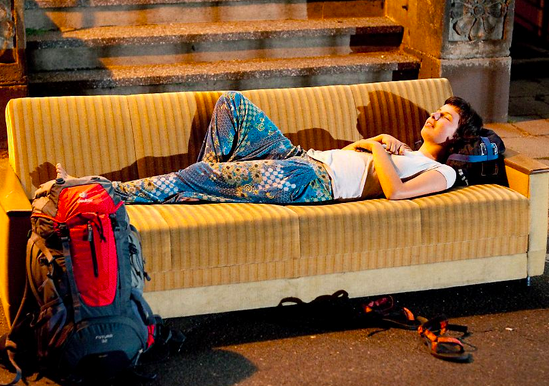
Wenn Besucher zum Schlafen kommen: Die Freude ist oft von kurzer Dauer!
When visitors stay to sleep: The joy is often short-lived!
Couchsurfing je sem tam maso
Wenn Besucher zum Schlafen kommen: Die Freude ist oft von kurzer Dauer!
Pünktlich zur Sommersaison melden sich alle Jahre Freunde und Familienangehörige zu Besuch als Couchsurfer. Warum Hotels und Airbnb suchen und buchen, wenn man alles kostenlos geniessen kann. Fast jeder hat Mühe nein zu sagen und bemüht sich um möglichst gute Gastfreundschaft. Ich habe schon wochenlang Freunde und Kollegen in einem Studentenzimmer beherbergt, warum sollte es später in einer 2-3 Zimmer-Wohnung nicht gehen? Wer will schon kleinliche Details vorher diskutieren. Das Motto tönt wie im 2Raumwohnung-Song: „Wir werden sehen“. In der Praxis treten aber die Probleme relativ bald in Erscheing: Unterschiedliche Erwartungen treffen aufeinander, Unterschiedliche Gewohnheiten und zudem werden oft doch Platzprobleme spürbar – insbesondere mit fortschreitendem Alter. Bei Eltern, Kindern und Enkeln ist man eher zu Kompromissen bereit aber auch da können schwere Konflikte auftreten. Besonders schwierig sind Besuche von Profi-Couchsurfern und Minnimalisten – die stolz darauf sind, dass sie nur 50 Sachen besitzen – aber alles andere vom Gastgeber ausleihen. Die Dauer des Aufenthalts ist oft von zentraler Bedeutung – ein paar Tage kann man auch mit wenig Schlaf auskommen – aber schon eine Woche kann tödlich sein – vor allem wenn dazu noch eine Erkrankung kommt. „Drum prüfe wer sich bindet, ob sich nicht irgendwo eine bessere Lösung findet“
When visitors stay to sleep: The joy is often short-lived!
Just in time for the summer season, every year friends and family members sign up to visit as couchsurfers. Why look for and book hotels and Airbnb when you can enjoy everything for free. Almost everyone has trouble saying no and tries to be as hospitable as possible. I’ve hosted friends and colleagues in a student room for weeks on end, why shouldn’t I be able to do it later in a 2-3 room apartment? Who wants to discuss petty details beforehand? The motto sounds like the 2Raumwohnung song: “We’ll see”. In practice, however, problems arise relatively quickly: different expectations clash, different habits and space problems often become noticeable – especially as you get older. With parents, children and grandchildren, people are more willing to compromise, but even here serious conflicts can arise. Visits from professional couch surfers and mini-minimalists – who are proud of the fact that they only own 50 things – but borrow everything else from the host are particularly difficult. The duration of the stay is often of central importance – you can get by on little sleep for a few days – but even a week can be fatal – especially if there is also an illness. “So let he who binds himself see if there isn’t a better solution somewhere”